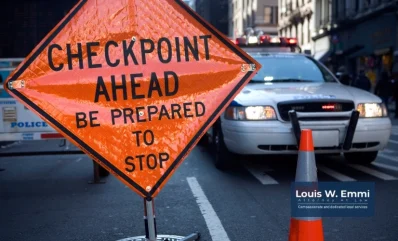

If you are driving through Harrisburg, Carlisle, York, Lancaster, or anywhere else across the Commonwealth, you may wonder, do you have to stop at a DUI checkpoint in Pennsylvania? The short answer is yes—but your rights do not disappear simply because you encounter a checkpoint.
Understanding Pennsylvania DUI laws can help you make informed decisions while protecting yourself during any traffic stop.
Are DUI Checkpoints Legal in Pennsylvania?
Yes. Pennsylvania courts have determined that properly conducted DUI checkpoints—sometimes called sobriety checkpoints—are constitutional when law enforcement follows strict legal requirements. These checkpoints are designed to identify impaired drivers while minimizing unnecessary intrusions on motorists.
Unlike a routine traffic stop, officers do not need individualized suspicion to briefly stop vehicles at a checkpoint. However, they must comply with legal procedures established by Pennsylvania law and court decisions.
For example, officers generally cannot decide on a whim to establish a checkpoint. Instead, law enforcement agencies typically must plan the operation and follow neutral guidelines regarding which vehicles are stopped.
What Happens at a Pennsylvania DUI Checkpoint?
Most checkpoint stops are brief. An officer will typically ask for your driver’s license, vehicle registration, and proof of insurance while observing whether there are signs of impairment. During the encounter, officers may look for indicators such as:
- The odor of alcohol or marijuana coming from the vehicle
- Bloodshot or glassy eyes
- Slurred or confused speech
- Difficulty responding to simple questions
- Open containers of alcohol inside the vehicle
- Admissions regarding recent alcohol or drug consumption
- Visible drug paraphernalia or other evidence suggesting impairment
Do You Have to Stop?
If you encounter an official DUI checkpoint, you must stop as directed by law enforcement. Ignoring officers, driving through the checkpoint, or refusing to stop could lead to additional criminal or traffic-related consequences.
That said, drivers generally retain important constitutional rights during the stop. You still have the right to:
- Remain calm and avoid answering potentially incriminating questions.
- Decline consent to a search of your vehicle unless officers have legal authority to conduct one.
- Avoid making admissions about drinking or drug use.
- Request an attorney if you are arrested. In 2024, 804,926 Americans were arrested for suspected DUI.
- Challenge the legality of the checkpoint later if proper procedures were not followed.
Exercising your rights respectfully is often the wise approach.
Can You Legally Avoid a DUI Checkpoint?
If you see signs announcing a checkpoint before reaching it, you may legally turn onto another public road to avoid it—provided you do so safely and without violating any traffic laws. Making an illegal U-turn, speeding away, driving recklessly, or committing another traffic violation may give officers an independent reason to stop your vehicle. Simply avoiding a checkpoint is not automatically evidence of guilt under Pennsylvania law.
Hire a DUI Lawyer
If you were arrested after a DUI checkpoint, don’t wait to get the legal guidance you need. Every decision you make after an arrest can affect the outcome of your case. Louis W. Emmi, Attorney at Law, provides aggressive defense for individuals facing DUI charges throughout Pennsylvania and offers free consultations to discuss your options.
When your license, reputation, and future are on the line, don’t face the criminal justice system alone. Contact Louis W. Emmi, Attorney at Law, today to hire a skilled DUI lawyer who will work to protect your rights and pursue the optimal result in your case.