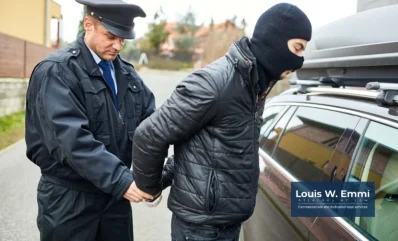

If you or someone you love has been arrested for a felony in Pittsburgh, Allegheny County, or a nearby borough such as Mt. Lebanon, Bethel Park, Dormont, or West Mifflin, knowing what comes next can make an overwhelming situation easier to navigate. Understanding what happens after a felony arrest in Pennsylvania can help you make informed decisions while protecting your rights from the earliest stages of the case.
The Arrest Is Only the Beginning
A felony arrest can feel like the entire case has already been decided. It has not. An arrest means authorities have acted on an allegation; it does not establish guilt.
What happens next depends on the circumstances of the alleged offense, the evidence available to law enforcement, the defendant’s prior record, and other factors. Pennsylvania’s criminal justice process contains several stages, and decisions made early in the case can influence what happens later.
For someone facing charges in Pittsburgh or another Allegheny County community, having a clear understanding of those stages can help reduce uncertainty.
What Happens Immediately After a Felony Arrest?
After an arrest, the defendant will generally be processed according to standard procedures. Depending on the circumstances, this can involve identification, fingerprinting, photographs, and other booking procedures.
The defendant may then appear before a judicial officer for an initial proceeding. This stage can address important issues such as the charges, bail, and conditions of release.
The exact process can vary based on the alleged offense and the circumstances surrounding the arrest. For example, a person accused of a serious violent offense may face different considerations than someone charged with a nonviolent felony. Important issues following an arrest may include:
- Bail and detention. A judge may determine whether the defendant can be released while the case proceeds and, if so, what conditions apply. Those conditions can sometimes involve restrictions on travel, contact with certain people, or other requirements.
- The criminal complaint. The complaint identifies the offenses being alleged and provides important information about the prosecution’s accusations.
- Initial court proceedings. The case begins moving through the Pennsylvania court system, with additional proceedings scheduled as appropriate.
- Preservation of evidence. Evidence can include police reports, surveillance footage, photographs, physical evidence, electronic communications, witness statements, and other materials.
- Legal representation. Speaking with a Pennsylvania felony attorney early can help a defendant understand the allegations and make decisions before important procedural deadlines or hearings.
Understanding Pennsylvania Felony Charges
Pennsylvania generally divides felonies into three grades: first-degree, second-degree, and third-degree felonies. Certain particularly serious offenses can carry enhanced consequences under Pennsylvania law.
The classification of an offense matters because it can affect the potential sentence and other consequences associated with a conviction.
For example, felony penalties may involve substantial incarceration, fines, probation, or other court-imposed consequences. A conviction can also create difficulties that extend beyond the courtroom, potentially affecting employment opportunities, professional licensing, housing, education, and other areas of life.
The potential outcome depends on the specific charge and circumstances. Someone facing a felony should not assume that a particular sentence is inevitable simply because it appears in the statute.
The Preliminary Hearing
One important stage in many Pennsylvania criminal cases is the preliminary hearing. This hearing is not a trial. Instead, it generally provides an opportunity for the prosecution to establish that there is sufficient evidence to continue the case. The preliminary hearing can nevertheless be significant.
The prosecution may present testimony or other evidence, and the defense has an opportunity to challenge the Commonwealth’s case within the scope of the hearing. Questions concerning witnesses, identification, physical evidence, and the circumstances surrounding the alleged offense may become important.
A defense attorney can evaluate the allegations and determine how the preliminary hearing fits into the overall defense strategy.
What Happens If the Case Moves Forward?
If the case proceeds beyond the preliminary stages, additional court proceedings may follow. Depending on the circumstances, these can include arraignment, pretrial conferences, motions, plea negotiations, and ultimately a trial. Only around 2% of criminal cases are brought to trial.
This is where understanding Pennsylvania felony laws becomes particularly important. Criminal cases are not necessarily resolved simply by determining whether an alleged incident occurred. The prosecution must establish the required elements of the charged offense under the applicable law. A defense may involve examining issues such as:
- Whether police had the legal authority to conduct a search or seizure.
- Whether statements were obtained in compliance with constitutional requirements.
- Whether witnesses can reliably identify the defendant.
- Whether physical or digital evidence actually connects the defendant to the alleged offense.
FAQs
Can a Felony Arrest Affect My Driver’s License in Pennsylvania?
A felony arrest does not automatically cause every defendant to lose driving privileges. However, certain underlying allegations, particularly those involving DUI or other motor-vehicle offenses, can trigger separate licensing consequences. The Pennsylvania Department of Transportation may impose administrative actions independent of the criminal proceeding, making it important to address both matters promptly and separately.
Will a Felony Arrest Show Up on a Background Check?
An arrest can potentially appear during certain background investigations even when the underlying case has not resulted in a conviction. Employers, licensing organizations, landlords, and other entities may use different screening practices. Pennsylvania law also provides mechanisms that may limit public access to certain records under qualifying circumstances, so the effect of an arrest depends on the case. Felons face a 30% unemployment rate.
Can My Employer Fire Me After a Felony Arrest?
An arrest does not necessarily establish workplace misconduct, and employment consequences depend on factors such as company policies, contracts, job requirements, and the nature of the allegations. Some positions involve additional legal or regulatory considerations. Anyone concerned about employment should avoid making assumptions about what an arrest means for their job and obtain advice tailored to their circumstances.
Can a Felony Charge Be Reduced to a Misdemeanor?
A felony charge can sometimes be resolved through a negotiated reduction, although there is no universal rule requiring prosecutors to offer one. Whether a reduction is realistic can depend on the evidence, alleged conduct, criminal history, applicable statutes, and circumstances surrounding the incident. The potential consequences of accepting a reduced charge should also be carefully evaluated beforehand.
Hire a Felony Lawyer Today
If you are facing serious criminal charges in Pittsburgh or the surrounding boroughs, you do not have to navigate the process alone. Contact Louis W. Emmi, Attorney at Law for a free consultation and hire a trusted felony lawyer who can help you understand your rights and legal options.