
Get Your Free Consultation
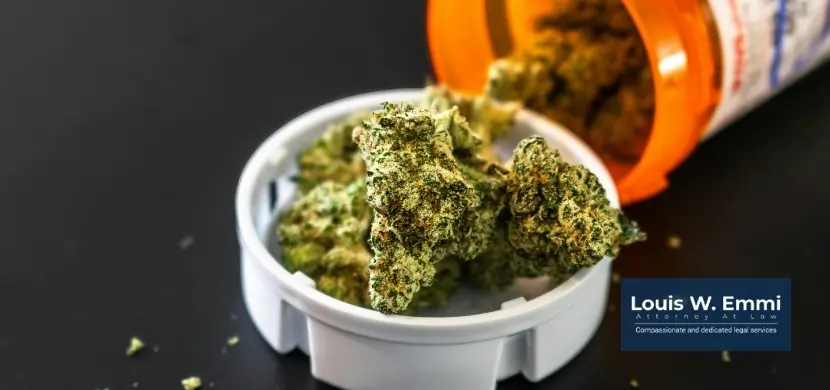
The possession of illegal drugs in the state of Pennsylvania is a serious offense. Even drugs like marijuana, made legal in other states, carry serious prison sentences. It can prove difficult to dispute a drug possession charge alone, especially in large cities like Pittsburgh. A Pittsburgh drug possession lawyer can advocate for you and make your voice heard.
Louis W. Emmi Attorney at Law offers 40 years of experience in the world of criminal defense. We serve clients throughout Pittsburgh and its boroughs, including Bethel Park, Castle Shannon, and Dormont. We are skilled in litigation, and we can support you throughout the trial process and advocate for your innocence.
Comprehensive legal assistance in Pittsburgh, Pennsylvania.
Pittsburgh and the state of Pennsylvania have strict laws against drug possession. With Pittsburgh reporting approximately 1,600 overdoses per year, city officials strive to reduce drug use however they can. To aid in deterring drug use, Pennsylvania drug possession laws have two distinct criminal charges.
The first main type of drug possession for which people in Pittsburgh and Pennsylvania can be arrested is simple possession. With simple possession, an individual is accused of possessing a small or moderate amount of drugs intended for personal use only. Simple possession is considered a misdemeanor.
The other drug possession charge is possession with intent to deliver (PWID). This charge is for individuals who manufacture, deliver, sell, or otherwise share drugs with others. Even sharing marijuana with a friend for free can be classified as PWID under Pennsylvania law. PWID is considered a felony and is prosecuted more severely than simple possession.
The DEA ranks drugs into five categories (schedules) based on how likely they are to be abused and their use in modern medicine. The most severe drug possession sentences are typically related to Schedule I or Schedule II drugs. These drug schedules are the two highest categories and therefore have the strongest punishments.
Schedule I drugs are considered to have “no currently accepted medical use and a high potential for abuse,” according to the DEA. Marijuana is considered a Schedule I drug, although this is highly contested across the United States. Despite being legalized in certain states, Pennsylvania still classifies marijuana as an illegal drug and therefore among other Schedule I drugs like:
Meanwhile, Schedule II drugs are considered to have a similar or lesser risk of abuse than Schedule I drugs. They are also used in widespread medicine and prescribed by doctors. Schedule II drugs include:
If you are arrested for possession of a Schedule II substance but can prove you have a legitimate prescription, your lawyer can get the charges against you dropped. Both Schedule I and II drugs are controlled substances and make up the bulk of drug possession cases.
Regardless of the specific drugs involved in your drug possession case, the team at the law office of Louis W. Emmi is here to help. Our services cover multiple drug charges, from possession to distribution to trafficking.
Encountering the police when you have drugs in your possession is terrifying, but how you respond matters. If the police ask to search you or your property, you are allowed to refuse them. This refusal is protected under the Fourth Amendment, which safeguards against unreasonable search and seizure.
Under no circumstances should you destroy or eat your drugs to hide them from the police. If you are caught, the police can charge you with attempting to destroy evidence. This makes it harder to pursue a dismissal or acquittal in court. Consuming drugs can also cause severe medical issues.
If you are arrested for drug possession, the most important thing to do is stay calm. Panicking or arguing with police officers can put you in even more trouble. Instead, stay quiet and use your Fifth Amendment right to avoid self-incrimination. Once you request a lawyer, say nothing else until your lawyer arrives.
The police will say whatever they can to convince you to talk without a lawyer present. They can make promises and pretend to be your friend. They can even lie to you, claiming they have evidence or testimonies that do not exist. The police want to make it easier to prosecute you for drug possession. Anything you say can be used against you.
As a citizen of Pittsburgh, your arraignment should occur at the courthouse for the Pittsburgh Division of the U.S. District Court, covering the Western District of Pennsylvania. The courthouse is located at 700 Grant Street in Pittsburgh. Your arraignment must be scheduled within 72 hours of your arrest.
While an arraignment is not a trial, it is still vital to have your drug offense lawyer with you during the proceedings. The arraignment is where you’re informed of your charges and your rights.
During the arraignment, your lawyer can help you argue for release on your own recognizance or help you obtain a bail bond. Both of these options can get you out of jail while you work through your case.
Even when your odds look grim, there are multiple defenses your attorney can use to protect you in a drug possession case. A Pittsburgh drug possession attorney at Louis W. Emmi Attorney at Law can utilize numerous strategies in your defense, including:
When you plead not guilty to a drug possession charge in Pittsburgh, it’s important to sit down with your lawyer and talk about your most effective defense. Be honest and upfront with your lawyer when in private. Attorney-client privilege protects anything you tell your lawyer. Telling your lawyer the truth can better help them defend you in court. Your lawyer can still help you pursue an acquittal, even if you admit fault to them.
There are three legal categories of drug possession charges. The first and most common is actual possession, where drugs were found on an individual’s person. Others are charged with constructive possession, where police find drugs near an individual but not on their person. Lastly, you can be charged with possession with intent to distribute, connecting an individual with drug trafficking and dealing.
Drug possession sentencing in Pennsylvania varies depending on the quantity of drugs found on a person. Pennsylvania drug possession laws list different minimum sentences based on the type of drug involved in the case and the quantity. These minimum sentences typically include both a fine and a prison sentence. The larger the drug quantity, the longer the sentence.
A simple possession charge in Pennsylvania occurs when police find drugs on an individual intended for personal use. This charge is typically applied to small amounts of street drugs such as marijuana, cocaine, and heroin. The state legislature lists the base sentence for simple possession charges as up to a year in jail and a $5,000 fine.
First-time drug offenders can potentially go to jail in Pittsburgh. Pennsylvania charges first-time drug offenders based on the type of drug in an individual’s possession and the quantity of said drug. Even small amounts of illegal drugs carry a prison sentence. However, as a first-time offender, you may qualify for the Accelerated Rehabilitative Disposition (ARD) program, an alternative to prison.
If you are facing a drug possession charge, Louis W. Emmi Attorney at Law can help. Our experienced and dedicated team can investigate your case and build a strong defense to present in court. We even offer free consultations to determine effective defense strategies. Contact us today to hire a drug possession lawyer from our firm, and see how we can help you with your case.
To learn more about our firm or the services we provide call our Pittsburgh office at
Fields marked with an * are required
"*" indicates required fields
Copyright © 2026 Louis W. Emmi, Attorney at Law • All Rights Reserved.
Disclaimer | Site Map | Privacy Policy.
Digital Marketing By: 
